
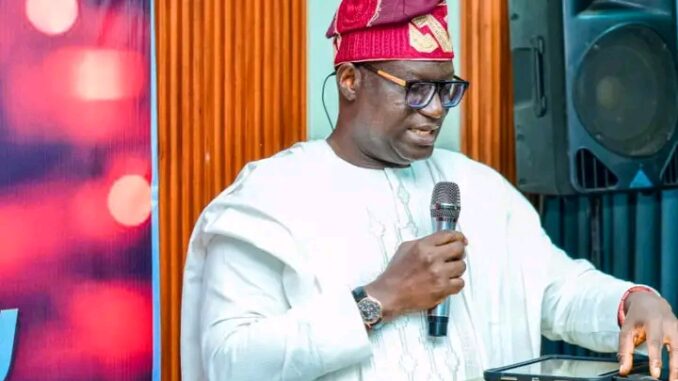
One of my findings in the past few months of my intensive consultation in respect of my bid for the gubernatorial ticket of APC in 2026 Osun State election is that we need to do more on the communication of the achievements of President Bola Tinubu administration to all and sundry. I spoke to this during my appearance on the “Political Update” segment of the NTA Network Service recently. This gap inspired this piece.
Since May 2023, Nigeria has undergone one of the most far-reaching reform periods in its recent history, spanning economic stabilisation, infrastructure renewal, security reinforcement, social welfare expansion, agriculture and food interventions, financial-sector restructuring, and systemic reforms across education, health, and the maritime industries. While Nigerians continue to contend with inflation, insecurity and cost-of-living pressures, available local and international data reveal meaningful progress across several pillars of national development.
Macroeconomic and fiscal stabilisation remain a central pillar of these gains. In May 2025, the credibility of ongoing reforms received a major boost when Moody’s upgraded Nigeria’s sovereign credit rating from Caa1 to B3, citing a stronger external position, improved fiscal discipline, and better monetary coordination. Later, in November 2025, S&P Global Ratings revised Nigeria’s outlook from “stable” to “positive” while affirming long- and short-term ratings at B-/B, further signalling increased investor confidence.
According to the World Bank’s 2025 assessment, Nigeria’s current-account surplus rose to 6.1% of GDP in Q1 2025, driven by stronger non-oil exports and a decline in refined-fuel imports. Gross external reserves also grew to over US$42 billion by September 2025, up from US$37.9 billion in April 2025—representing one of the steepest reserve rebuilds in recent years.
On the fiscal side, Moody’s reports that the removal of petrol subsidies has created annual savings of more than ₦4.4 trillion, while Nigeria’s new digitised revenue architecture—popularly known as TaxNet 2.0—delivered an 18% increase in tax collection year-on-year in Q1 2025. As a result of these reforms, Nigeria’s general government debt has moderated to around 40.
1% of GDP, down from levels previously above 50%, signalling strengthened fiscal sustainability.
Complementing the macroeconomic reforms are sweeping changes across the banking and financial-services sector.
The 2025 IMF Article IV report notes significant progress: Nigeria has stopped monetary financing of the fiscal deficit, removed fuel subsidies, restored a functioning interbank FX market, cleared inherited FX-forwards obligations, and unified the foreign-exchange market. These measures have reduced distortions, narrowed arbitrage opportunities, improved liquidity, and attracted rising portfolio inflows in early 2025. The clearance of FX backlogs and the disciplined, rules-based monetary stance of the CBN have been key factors behind the positive reassessment by global rating agencies.
The infrastructure sector has also seen unprecedented activity.
According to the Ministry of Works (2025), over ₦2.2 trillion has been committed to federal road development, covering 440 active projects, 260 completed palliative interventions, and 29 legacy initiatives across all regions. The 700-km Lagos–Calabar Coastal Highway—one of West Africa’s most ambitious modern highway projects—continues to progress across multiple states. The Sokoto–Badagry Superhighway and more than 1,200 km of ongoing federal roads and bridges nationwide reinforce the administration’s push for integrated national mobility.The Lagos–Ibadan Expressway, a critical artery of Nigeria’s economy, is now reported to be 90–92% completed, a major jump from its stalled 70–75% status in 2023. Travel time has fallen by up to 35%, reducing journeys from 3–4 hours to approximately 2–2.5 hours. On rail infrastructure, renewed funding has revived long-delayed projects such as the Kano–Maradi and Kano–Kaduna standard-gauge lines, as well as the $3 billion reconstruction of the Port Harcourt–Maiduguri Eastern Railway, reconnecting the South-South, South-East, North-East, and North-Central regions.
Security reforms have been broad and coordinated. Enhanced joint-operations across military, police, intelligence and local structures have led to reduced frequencies of large-scale attacks in many North-West and North-Central hotspots. The deployment of armoured carriers, drones, expanded surveillance technologies and new recruitment waves has improved operational readiness. In the Niger Delta, a combination of maritime surveillance, air reconnaissance and community intelligence has driven oil theft and pipeline vandalism to their lowest levels in over a decade, directly contributing to rising oil output and improved environmental stability. No doubt, there is still a lot to do on insecurity but the immediate future is brighter than what we had in the recent past.
Agriculture and food-security interventions have expanded rapidly. Under the Renewed Hope Agricultural Mechanisation Programme (2025), government procured 2,000 tractors, 10 combine harvesters, 12 mobile workshops, and 9,000 implements in partnership with Belarus. These are targeted to support over 550,000 hectares of cultivation, generating approximately 2 million metric tonnes of food and creating more than 16,000 jobs. The administration also distributed over 1 million bags of fertiliser, released 42,000 metric tonnes of grains from national reserves, and supported millers to distribute 60,000 metric tonnes of rice to stabilise supply.These efforts, alongside expanded irrigation and dry-season farming programmes, form the backbone of the long-term strategy to boost domestic food production and reduce volatility.
Education and social-welfare reforms have recorded visible progress. The Student Loans (Access to Higher Education) Act 2024 established NELFUND, which has already supported over 500,000 students across universities, polytechnics, and colleges of education. Complementing this are new student hostels—each with capacity for 1,600 students—being built across 24 tertiary institutions.
Social welfare programmes have equally grown, with 5.7 million vulnerable households benefiting from the national cash-transfer scheme by mid-2025. In health, the 2025 federal budget allocated ₦2.48 trillion to the sector—an unprecedented 242% increase, marking a major shift in prioritising human development. More than 1,000 PHCs have been revitalised, while 5,500 more are under upgrade. Through the maternal-health initiative, over 4,000 women have received free caesarean surgeries, and national health-insurance coverage has expanded from approximately 16 million to 20 million Nigerians in under two years.The marine and blue economy continues to show steady growth. Port digitisation, reduced congestion, improved maritime security, expanded seafarer-training programmes, and the development of ship-repair and coastal-tourism frameworks position this sector as a future pillar of job creation and foreign-exchange earnings.
National development efforts also reflect regional balance and equity. As of 2025, about 52% of major road projects are located in the North and 48% in the South, while project-approval values show regional spread: the North-West alone accounts for around ₦5.97 trillion, followed by the South-South with ₦2.41 trillion, North-Central with ₦1.13 trillion, and the South-West outside Lagos with ₦604 billion. Overall, ongoing infrastructure projects are expected to create over 250,000 jobs nationwide.The broader macro-growth outlook is also improving. According to the IMF 2025 Article IV Report, Nigeria’s GDP grew 3.4% in 2024, driven by increased hydrocarbon output and growth in services, with a similar outlook for 2025. S&P projects an average 3.7% growth for 2025–2028, an upgrade from earlier forecasts. These improvements, backed by rising reserves, clearer fiscal frameworks, and positive investor sentiment, suggest that the structural reforms underway are laying the foundation for long-term expansion.
Overall, the gains recorded so far reflect a broad national effort to stabilise the economy, modernise infrastructure, strengthen security, reform public finance, expand access to education and healthcare, and build a more resilient, competitive and inclusive Nigeria. Though challenges persist—especially inflation, insecurity and living-cost pressures—the structural foundations being laid today hold significant promise for sustained national growth, shared prosperity and long-term stability.
Engr. Dideolu Falobi is a respected Nigerian engineer, corporate executive and community leader known for his transformative work in vertical transportation, public infrastructure advocacy, and grassroots development across Ijesaland, Osun State and Nigeria.
Leave a Reply